Forex for beginners works best when you learn the market structure, one strategy and risk rules before your first live trade
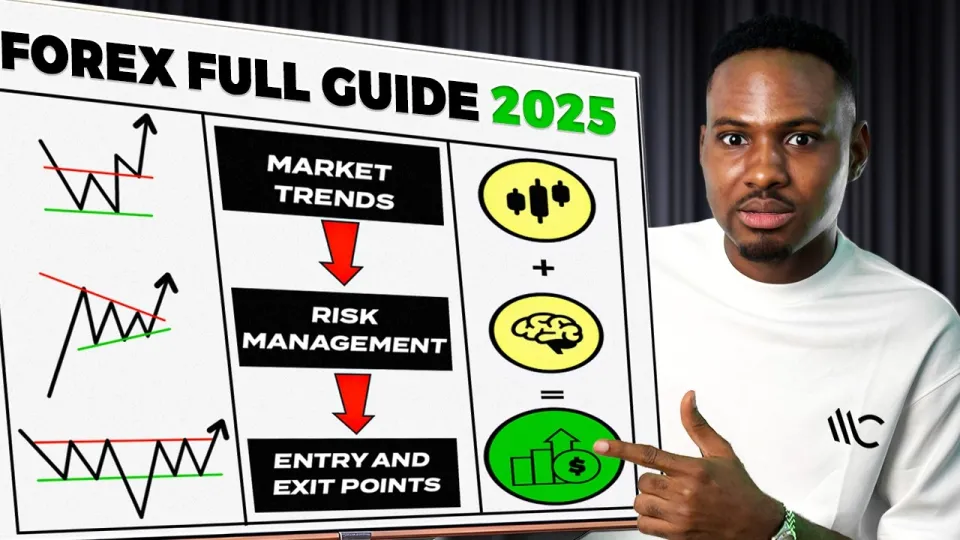
Video: How To Start Forex Trading For Beginners’ 2025 (Full Course)
Need articles like this for your video? They help promote it on YouTube and Google — order them in the Telegram bot @sat_sit_bot. The bot writes and publishes the articles itself (with your YouTube video embedded) on popular topical websites (no ads). Your first 50 articles are free.
· based on the channel Jeffrey Benson Forex
Forex for beginners is the process of learning how currency pairs are quoted and traded, choosing a broker and MetaTrader 5, testing one strategy on a demo account and only then placing a first live trade with a fixed stop loss and a risk limit per position. The full beginner course from Jeffrey Benson Forex walks through exactly this path, and the paid student program behind it is available at firepipsfx.com/plans.
What forex is and how the currency market works
Forex is an over-the-counter market where national currencies are traded in pairs, and the price of a pair shows how much of the quote currency is needed to buy one unit of the base currency. In EUR/USD the euro is the base and the US dollar is the quote, so a price of 1.0850 means one euro costs 1.0850 dollars. There is no central exchange: trading happens through banks, brokers and liquidity providers, which is why the market runs around the clock.
Four sessions define the daily rhythm:
- Sydney opens the week and is the quietest session.
- Tokyo follows and is most active in JPY and AUD pairs.
- London is the largest session by volume and sets most of the day's range in EUR/USD and GBP/USD.
- New York overlaps with London for a few hours, and that overlap is usually the most liquid window of the day.
Majors such as EUR/USD, GBP/USD, USD/JPY and AUD/USD carry the tightest spreads and the deepest liquidity, which makes them the sensible starting point. Exotic pairs and crosses look attractive because they move further in points, but wider spreads and thinner books punish beginners quickly.
The tools every beginner needs before the first trade
A working forex setup is small: a regulated broker account, the MetaTrader 5 platform, a demo account and a trading journal. MetaTrader 5 is the standard because it provides charting, order types, one-click trading and a strategy tester for backtesting. The broker matters more than the platform: check regulation, spreads on majors, execution quality, deposit and withdrawal terms, and whether the account type allows the lot sizes you plan to trade.
A practical checklist before funding anything:
- Open a demo account first and run it for at least a few weeks.
- Learn the four order types: market, limit, stop and stop-limit.
- Set up a chart template with a clean layout instead of stacking a dozen indicators.
- Keep a notebook or spreadsheet recording entry, exit, reason and result for every trade.
Writing trades down by hand is a habit many viewers of the course single out as the reason the material finally stuck. A written log turns watching tutorials into an actual skill, because it forces you to define why a trade exists before you take it.
A basic strategy foundation that survives real markets
A beginner strategy needs three components and nothing more: a market bias, an entry trigger and an exit rule. Bias answers which direction you are willing to trade — for example, price above a moving average on the higher timeframe means longs only. The entry trigger defines the exact candle or level where you act, such as a pullback to a support zone or a break of the previous session high. The exit rule sets both the stop loss and the take profit before the order is sent.
Support and resistance, trendlines and session highs and lows are enough structure for a first strategy. Indicators are optional confirmation, not the strategy itself. Backtest the idea on historical data in MetaTrader 5, then forward-test it on demo for a fixed number of trades and record the results. If the numbers do not hold up on demo, they will not hold up live.
How to place your first trade without gambling
A first live trade should be the smallest position the broker allows, with the stop loss placed at the level that invalidates the idea. Position size is calculated from risk, not from how confident you feel: decide the percentage of the account you are willing to lose, measure the distance in points to the stop, and let the lot size follow from those two numbers. A common beginner ceiling is 1–2% of the account per trade.
Step by step:
- Pick one major pair and one session to trade.
- Mark the key levels before the session opens.
- Wait for the setup defined in your plan, not for a feeling.
- Enter with a stop loss and take profit attached to the order.
- Log the trade and review it at the end of the week.
Common mistakes that cost beginners money
The most expensive beginner mistakes are structural, not technical. Overleveraging tops the list: a large lot size turns a normal stop into a blown account. Moving or removing a stop loss to avoid taking a loss turns a small planned loss into an uncontrolled one. Revenge trading after a loss, jumping between strategies every week and trading during low-liquidity hours all produce the same result — a shrinking balance and no data to learn from.
Other frequent errors include trading too many pairs at once, risking a different amount on every trade, ignoring news releases on the currencies in play, and treating a signal group as a substitute for understanding the setup. A signal can tell you what to trade; only your own rules tell you how much to risk and when to stay out. Copying trades is legitimate only when the risk per position is defined in advance and the account can absorb a losing streak.
Questions beginners ask most often
Beginners usually want to know how long it takes before trading becomes consistent, how much capital is required, whether demo trading is worth the time and how to tell a good broker from a bad one. There is no fixed timeline: progress depends on how many trades are logged and reviewed, not on how many videos are watched. A small live account is useful only after a demo record shows a defined process. Broker choice comes down to regulation, real spreads and clean withdrawals, checked before any deposit.
Useful links
- Student program and course plans: https://firepipsfx.com/plans
- Free daily signal channel: https://t.me/firepipsignals
- Broker registration used in the course: https://my.assexmarkets.com/auth/register?partner_code=1699134
- Premium signal group access: https://t.me/jeffreybenzhelpbot
Final takeaway
Forex for beginners is a sequence, not a shortcut: understand how pairs are quoted and when sessions run, set up a broker and MetaTrader 5, test one strategy on demo, then risk a small fixed percentage on each live trade with a stop loss in place. The course from Jeffrey Benson Forex is useful precisely because it follows that order and spends most of its time on tools, strategy structure and risk rather than on promises. Anyone can copy a trade, but only a written plan and a trade log make the results repeatable. Start with the student plans at firepipsfx.com/plans once the demo record is consistent.
Key takeaways
- Forex is the market where currencies are quoted in pairs: EUR/USD, GBP/USD, USD/JPY and others trade 24 hours a day from Monday to Friday.
- A beginner needs three things before risking money: a broker, MetaTrader 5 and a demo account with a written trading plan.
- One strategy and a fixed risk per trade (often 1–2% of the account) matter more than the number of indicators on a chart.
- A first live trade is placed with a stop loss and a take profit set before entry, never after the position goes against you.
- Most beginner losses come from overleveraging, revenge trading and moving stop losses, not from a lack of signals.
Source: How To Start Forex Trading For Beginners’ 2025 (Full Course) · Markdown version
Questions & answers
How much money do I need to start forex trading?
You can start with a small account, but the amount matters less than the risk per trade. If you risk 1–2% per position, a few hundred dollars keeps losses survivable while you build a track record. Many beginners spend several weeks on demo first and fund live only after the process is consistent.
Is forex trading suitable for a complete beginner?
Yes, provided the learning order is respected: market basics, platform, one strategy, demo testing, then small live risk. The danger is not complexity but skipping steps and trading large positions before the rules are understood. A written plan and a trade journal make the learning curve measurable.
How long does it take to become profitable?
There is no fixed timeline, and anyone promising one should be treated with caution. Progress depends on how many trades you log and review, and on whether you keep the same strategy long enough to collect data. Consistency usually shows up in the journal before it shows up in the balance.
Should I copy trades from a signal channel?
Copying trades can work as a supplement if the risk per position is defined in advance and the account can survive a losing streak. It does not replace understanding the setup, because you still need to size positions and decide when to stop. Treat signals as one input, not as the whole strategy.